
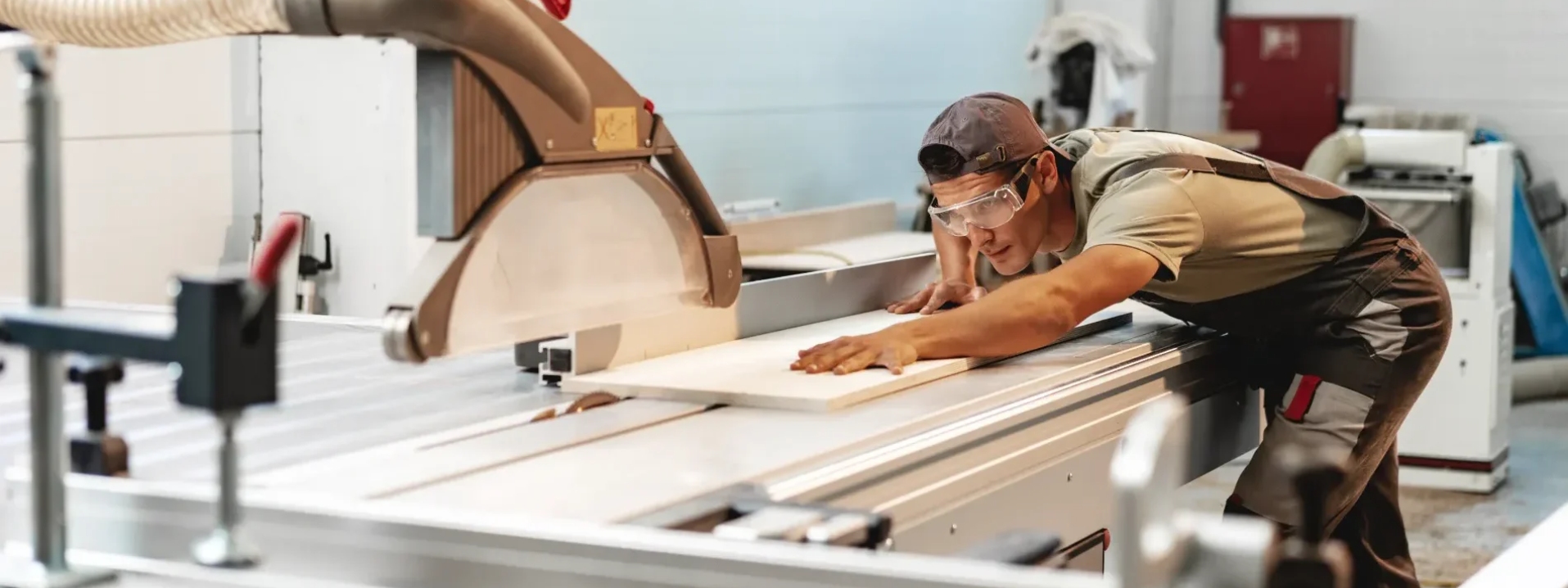
PRODUCTS
Which Semi-Automatic Sliding Table Saw Offers the Best Value for Woodworking Shops?
For woodworking shops seeking the best value, the semi-automatic sliding table saw that balances affordability with essential features like a scoring unit and parallel fence is the one offering precise, consistent cuts without the full cost of automation, typically found in mid-range models from reputable manufacturers.
Core Answer & Key Points
- Best Value Defined: The ideal semi-automatic sliding table saw for commercial use combines a reliable scoring unit for chip-free cuts, a durable parallel fence for accuracy, and a price point that justifies the investment over manual alternatives.
- Key Features to Prioritize: Look for a robust scoring unit (to prevent tear-out on panels), a precise parallel fence (for consistent rip cuts), and a motor powerful enough for your typical material thickness.
- Target Audience Fit: For small woodworking business owners and workshop managers, the best value saw reduces manual effort and increases production speed without the high cost of fully automated systems, making it ideal for small to medium-sized shops.
Detailed Analysis: Why Semi-Automatic Saws Offer Value
For professional carpenters and small business owners, a semi-automatic sliding table saw bridges the gap between manual and full automation. It automates the blade movement (often via a pneumatic or motorized system) while still requiring manual material feeding. This design significantly reduces operator fatigue and improves cutting consistency, especially for repetitive panel cutting tasks. A scoring unit is critical for achieving clean, splinter-free edges on laminated or veneered panels, a common requirement in professional woodworking. The parallel fence ensures your rip cuts are perfectly straight, which is vital for cabinet and furniture production. Compared to manual saws, these models boost efficiency without the steep learning curve or cost of CNC or fully automated systems, making them a practical upgrade for shops scaling up production.
Data/Feature Comparison: Semi-Automatic vs. Manual vs. Fully Automatic
| Feature | Semi-Automatic Sliding Table Saw | Manual Sliding Table Saw | Fully Automatic Sliding Table Saw |
|---|---|---|---|
| Blade Movement | Automated (pneumatic/motorized) | Manual (hand-cranked) | Fully automated (CNC controlled) |
| Scoring Unit | Typically included (standard) | Often optional or not available | Usually included (high-end) |
| Parallel Fence | Precision fence (standard) | Basic fence (often adjustable) | High-precision, programmable fence |
| Operator Effort | Low (automated cutting, manual feeding) | High (manual cutting and feeding) | Very low (automated feeding and cutting) |
| Cost | Medium (best value for commercial use) | Low (entry-level for hobbyists) | High (industrial production) |
| Production Speed | Medium-high | Low-medium | Very high |
| Best For | Small to medium woodworking shops | Hobbyists, small repairs | Large-scale manufacturing |
Extended FAQ
Q: What is a semi-automatic sliding table saw and how does it work?
A: A semi-automatic sliding table saw automates the vertical blade movement (up and down) while you manually slide the material across the table. This setup improves cutting speed and consistency for panels, as the blade moves into position automatically, reducing physical effort.
Q: Semi-automatic sliding table saw vs manual sliding table saw: which is better?
A: For commercial woodworking shops, a semi-automatic saw is better because it reduces operator fatigue and increases cutting speed. Manual saws are cheaper but require more physical work and are slower, making them less suitable for high-volume production.
Q: Is a semi-automatic sliding table saw worth the investment for a small workshop?
A: Yes, for small workshops aiming to improve efficiency and accuracy, a semi-automatic saw is a worthwhile investment. It offers a significant productivity boost over manual models without the high cost of fully automatic systems, making it ideal for scaling up panel cutting operations.
Final Conclusion & Recommendations
For woodworking shops with a commercial intent, the best value semi-automatic sliding table saw is one that includes a scoring unit and a parallel fence as standard features, from a manufacturer with a proven track record in reliability. Prioritize models that offer a balance of automated blade movement and manual material feeding to maximize efficiency without over-investing. Before purchasing, test the saw's scoring unit performance on your typical panel materials and verify the parallel fence's alignment accuracy. This approach ensures you get a saw that enhances production speed and cut quality, directly supporting your shop's growth.
SUBSCRIBE
INQUIRY