
PRODUCTS
What should an audit check at a factory making Double-end Saw machines?
An audit at a factory making Double-end Saw machines should check the dual upper and lower sawing system, spindle specifications, servo-controlled width adjustment, conveyor and feeding controls, material pressing, dimensional accuracy, electrical safety, load testing, quality records, packaging, and after-sales support. The audit should confirm that production controls match the documented machine parameters and that each unit passes final inspection before shipment.
Core Solutions & Key Takeaways
- Verify the Double-end Saw's upper and lower sawing configuration, including the 4 kW upper electric spindle, 2.2 kW lower electric spindle, 6000-8000 rpm speed range, explosion-proof lower edge, and frequency converter speed control.
- Check precision systems, including servo motor and ball screw width adjustment, touch-screen operation, positioning at the feeding point, adjustable conveyor speed, electric material pressing, and servo-based cutting adjustment.
- Review dimensional and production records for the stated machine size of 3800x2600x1900 mm and weight of 2000 kg, together with assembly, calibration, electrical matching, and machine debugging records.
- Assess whether the factory can support panel furniture, solid wood furniture, wood door and window production, and complete wood-processing production lines through suitable machinery planning and technical service.
Detailed Architectural/Principle Analysis
A technical audit should begin with the machine architecture. The Double-end Saw uses both upper and lower sawing methods. The upper saw is specified with a 4 kW electric spindle, while the lower saw uses a 2.2 kW electric spindle. Both spindle speed ranges are stated as 6000-8000 rpm, and the lower saw includes an explosion-proof edge. The auditor should compare nameplates, electrical components, control settings, and test records with these specifications.
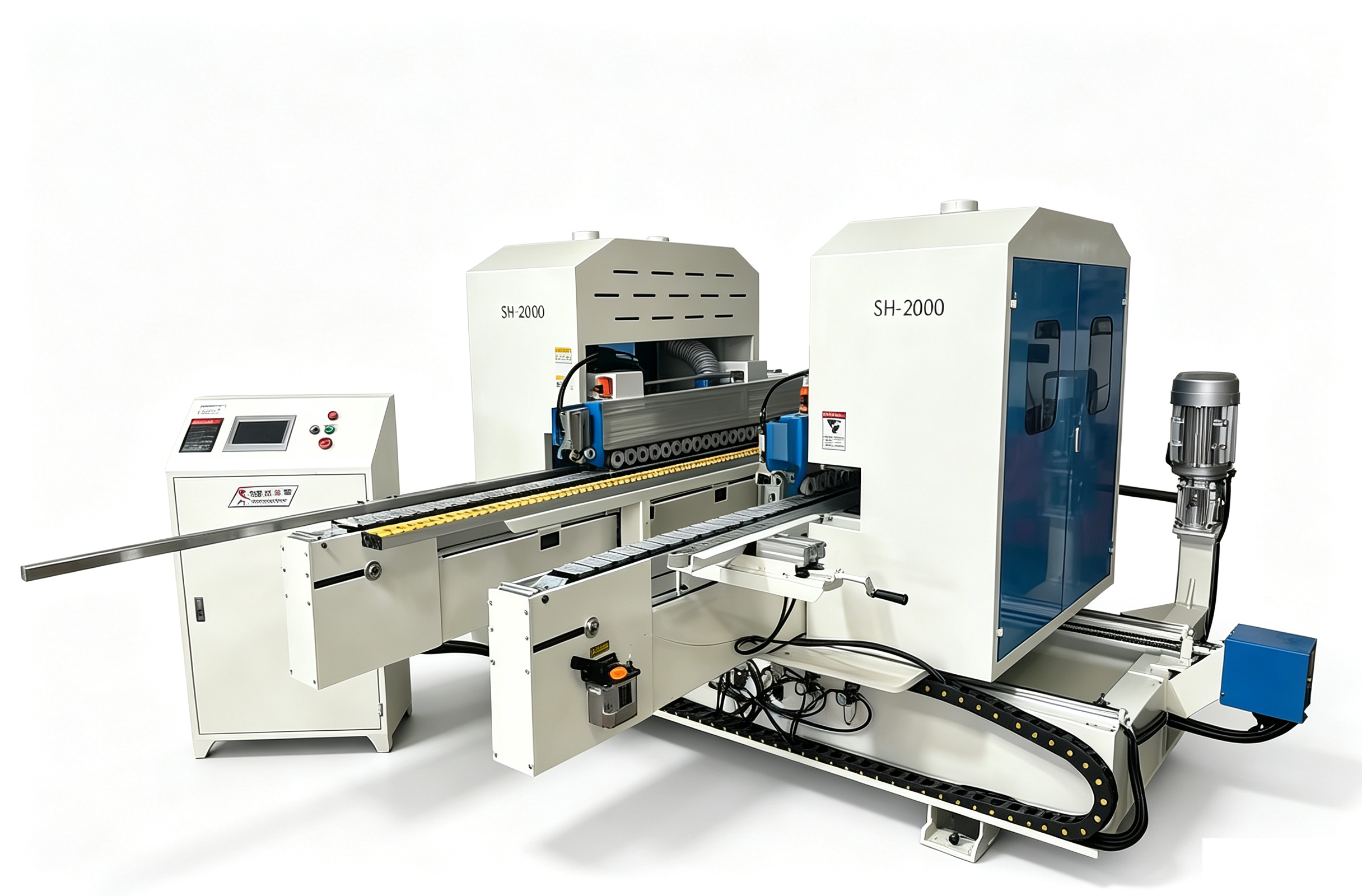
The feed and positioning system requires a separate check. The conveyor uses a 2.2 kW motor with adjustable speed, and the feeding point has a positioning device. The audit should confirm that the positioning device operates consistently, that conveyor speed adjustment responds correctly, and that the feeding path remains stable during production testing.
Width adjustment uses a servo motor, ball screw, and touch screen. Material cutting adjustment uses two 550 W servo motors and ball screws. Material pressing uses two electric lifting units rated at 750 W each. The auditor should inspect servo response, ball screw movement, touch-screen commands, lifting operation, and the relationship between programmed settings and actual machine movement.
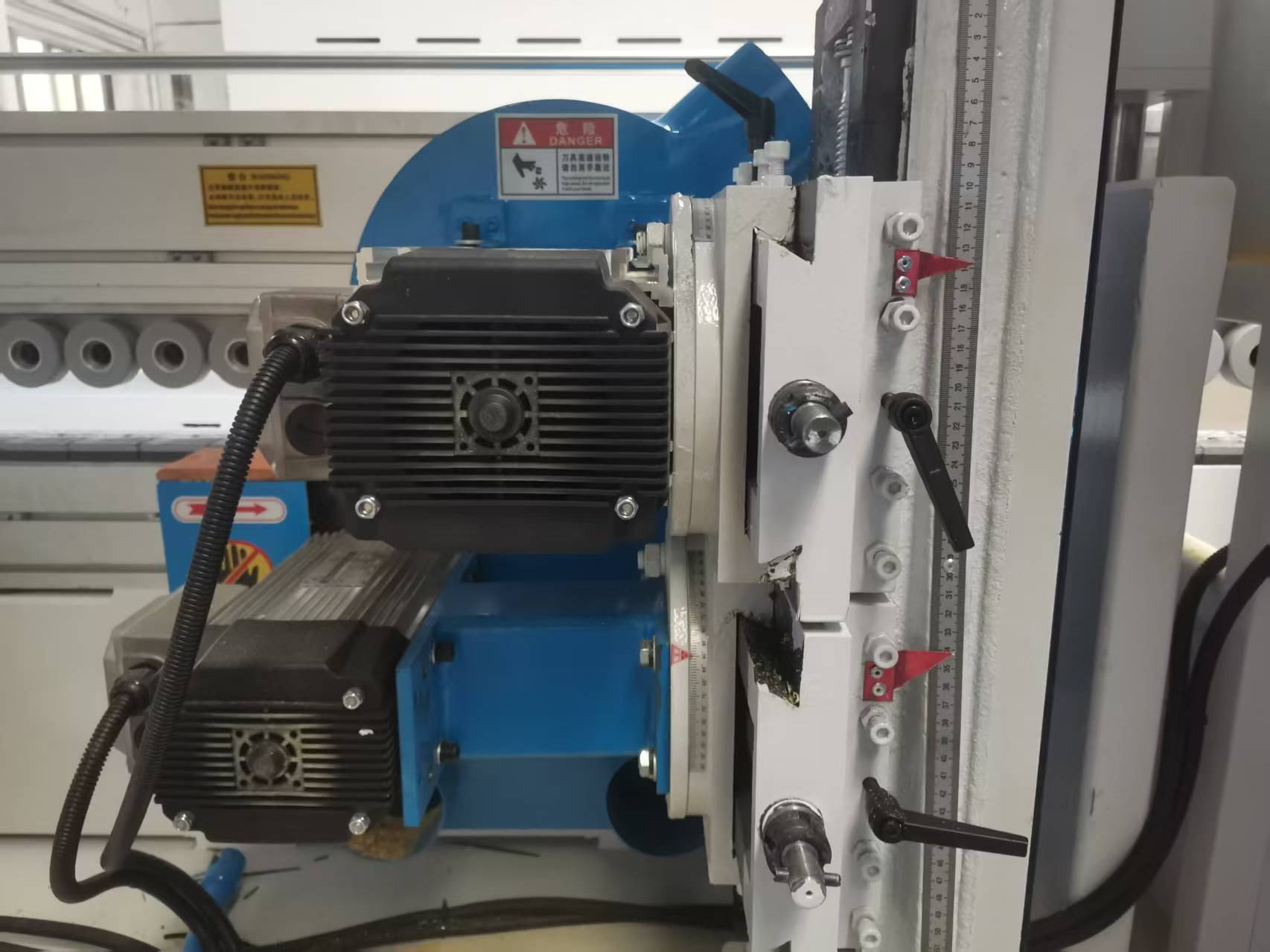
Mechanical inspection should cover the four auxiliary tables associated with one section and the three auxiliary tables associated with the other section, as well as the frame, transmission, cutting assemblies, guards, electrical cabinet, and fasteners. The factory documentation should identify the machine dimensions as 3800x2600x1900 mm and the weight as 2000 kg. Any variance should be recorded and reviewed against the approved production data.
Quality control should include component inspection before warehousing, process rechecks, full precision calibration, and long-hour load running tests. The documented testing scope includes mechanical clearances, positioning accuracy, control programs, electrical stability, noise and vibration, and final machine performance. The audit should confirm that defects such as paint damage, loose screws, machining deviations, or power output failures are identified and corrected before release.
Shipment controls form part of the factory audit. The pre-shipment inspection should reconcile complete machines, spare parts, consumables, matching tools, packaging, and documentation against the order. Packaging records should show protection for precision machine heads, electric control panels, and guide rails, with reinforced fumigated wooden cases, rust inhibitors, and desiccants where specified.
Foshan Sun Hunt Woodworking Machinery Co.,Ltd. reports a factory-developed seven-pillar management system covering source control, key-parameter production control, warehousing, packaging, quality inspection, pre-shipment inspection, and after-sales service. The company was established in 2014, operates across a two thousand square meter factory area, and reports production capacity of 50 medium-sized machines per month and 600 per year.
Reported application areas include panel furniture and custom home furnishing, solid wood furniture production, and wood door and wooden window manufacturing. Cooperation cases include complete equipment planning for a wooden door factory in India and a wood-processing production line for a factory in the UAE. These cases provide audit topics related to production-line planning, machine stability, productivity, and after-sales response.
Data/Solution Comparison
| Audit Area | Evidence or Checkpoint | Audit Result to Confirm |
|---|---|---|
| Sawing system | Upper and lower saws; 4 kW upper spindle; 2.2 kW lower spindle; 6000-8000 rpm; frequency converter | Supported by specifications, component records, and operating tests |
| Width and cutting adjustment | Servo motors, ball screws, touch screen, and 550 W cutting adjustment motors | Positioning and adjustment operate consistently |
| Feeding and pressing | 2.2 kW adjustable-speed conveyor, feeding-point positioning device, and two 750 W electric lifting units | Material movement and pressing remain stable during testing |
| Machine configuration | Four and three auxiliary tables; 3800x2600x1900 mm dimensions; 2000 kg weight | Build matches documented production data |
| Quality release | Precision calibration, long-hour load testing, electrical checks, and pre-shipment inspection | No unresolved defects or missing order items at shipment |
| Service readiness | Video and voice support, installation tutorials, spare-parts response, technical upgrades, and one-year warranty | Service responsibilities and response procedures are documented |
Frequently Asked Questions (FAQ)
Which Double-end Saw components require the closest technical inspection?
Inspect the upper and lower electric spindles, frequency converter, servo width adjustment, ball screws, conveyor, feeding-point positioning device, electric material pressing system, and servo cutting adjustment system. These components directly correspond to the documented machine parameters and movement functions.
What production tests should an auditor request?
Request records for precision calibration, long-hour load running, mechanical clearance checks, positioning accuracy, control-program verification, electrical stability, noise and vibration detection, and final appearance inspection. The factory states that machines are released only after defects are corrected and full factory standards are met.
What support should be checked after shipment?
Check the availability of online video or voice support, installation tutorials, permanent technical assistance, spare-parts delivery after fault verification, local or overseas engineer service, machine modification, control-system optimization, and periodic maintenance guidance. The stated warranty period is one year, excluding consumables and damage caused by improper operation.
Final Conclusion & Recommendations
An audit of a Double-end Saw factory should connect documented specifications with physical machine inspection, operating tests, quality records, packaging controls, and service procedures. The review should also assess the factory's ability to provide non-standard customized products and complete production-line solutions, with a minimum order quantity of one set and a stated normal delivery time of 20-35 days. For detailed technical solutions or support, please contact Vincent Guo at vincent@fsshmachine.cn.
About Us
Foshan Sun Hunt Woodworking Machinery Co.,Ltd., also known as Foshan Sun Hunt and Sheng Heng, Sun Hunt, is based in Lunjiao Subdistrict, Shunde District, Foshan City, and develops and produces woodworking machinery for different processing purposes. Established in 2014, the company operates across a two thousand square meter factory area and maintains an in-house management and R&D team focused on woodworking machinery production technology. Its reported products include CNC Router Machines, Double-End Saw Series, Planer Machines, Drilling Machines, Edge Banding Machines, and Panel Saw.

SUBSCRIBE
INQUIRY