
PRODUCTS
How do I prevent a perfect Double-end Saw sample from hiding production risks?
To prevent a perfect Double-end Saw sample from hiding production risks, verify its full-load performance, dimensional accuracy, control stability, component traceability, packaging condition, and pre-shipment records. Review long-hour running tests, precision calibration, servo and conveyor functions, final inspection results, and after-sales response before treating the sample as evidence of production readiness.
Core Solutions & Key Takeaways
- Require full precision calibration, no-load operation, long-hour full-load running, precision remeasurement, noise and vibration detection, and electrical stability checks before shipment.
- Validate the Double-end Saw's upper and lower sawing functions, servo-based width adjustment, ball screw transmission, frequency converter speed control, conveyor adjustment, positioning device, and electric material pressing.
- Check traceability from component sourcing through production, warehousing, packaging, quality inspection, and pre-shipment inspection.
- Assess the machine against relevant production environments, including wood door factories, panel furniture production, and broader wood processing lines.
Detailed Architectural/Principle Analysis
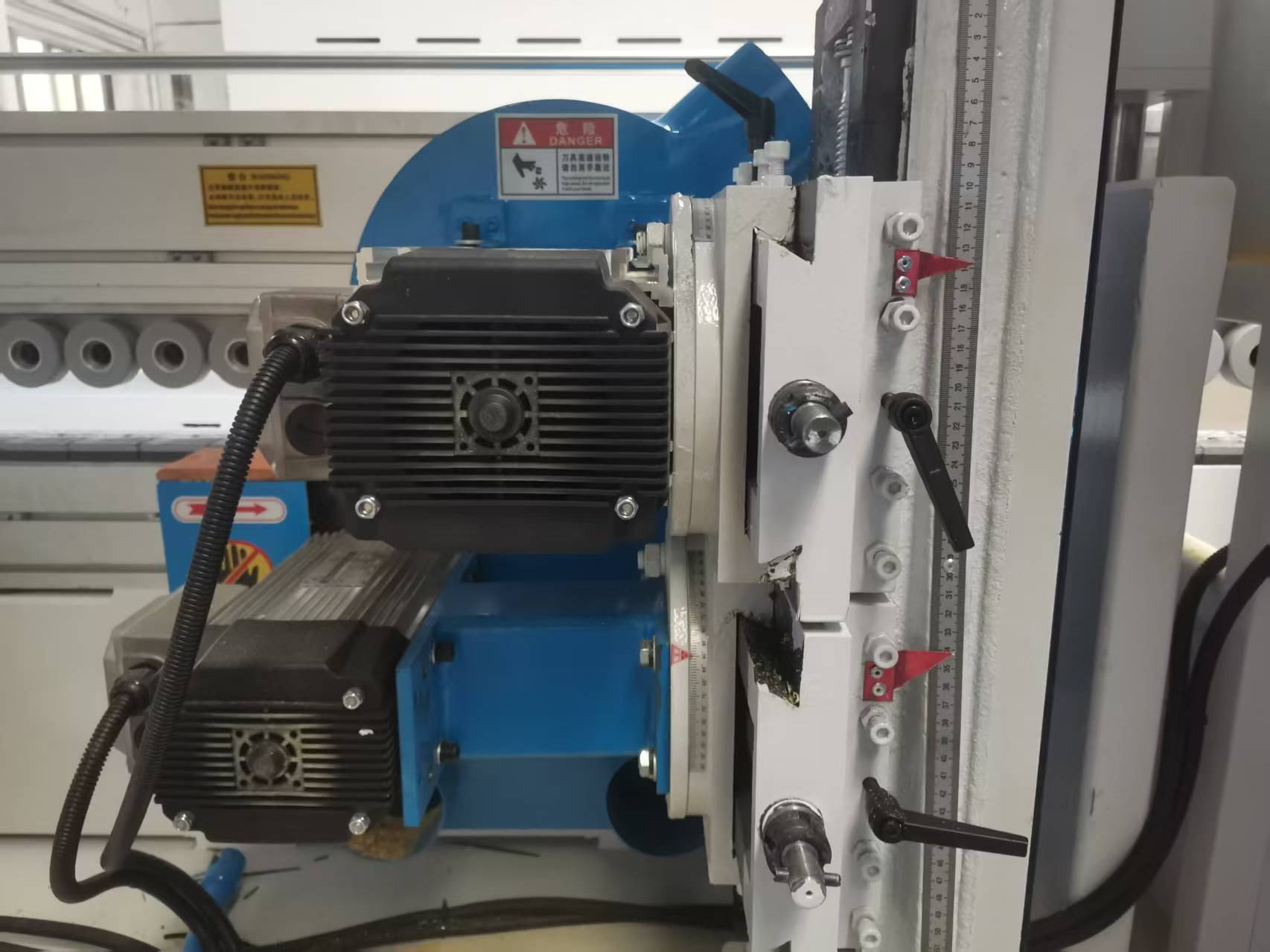
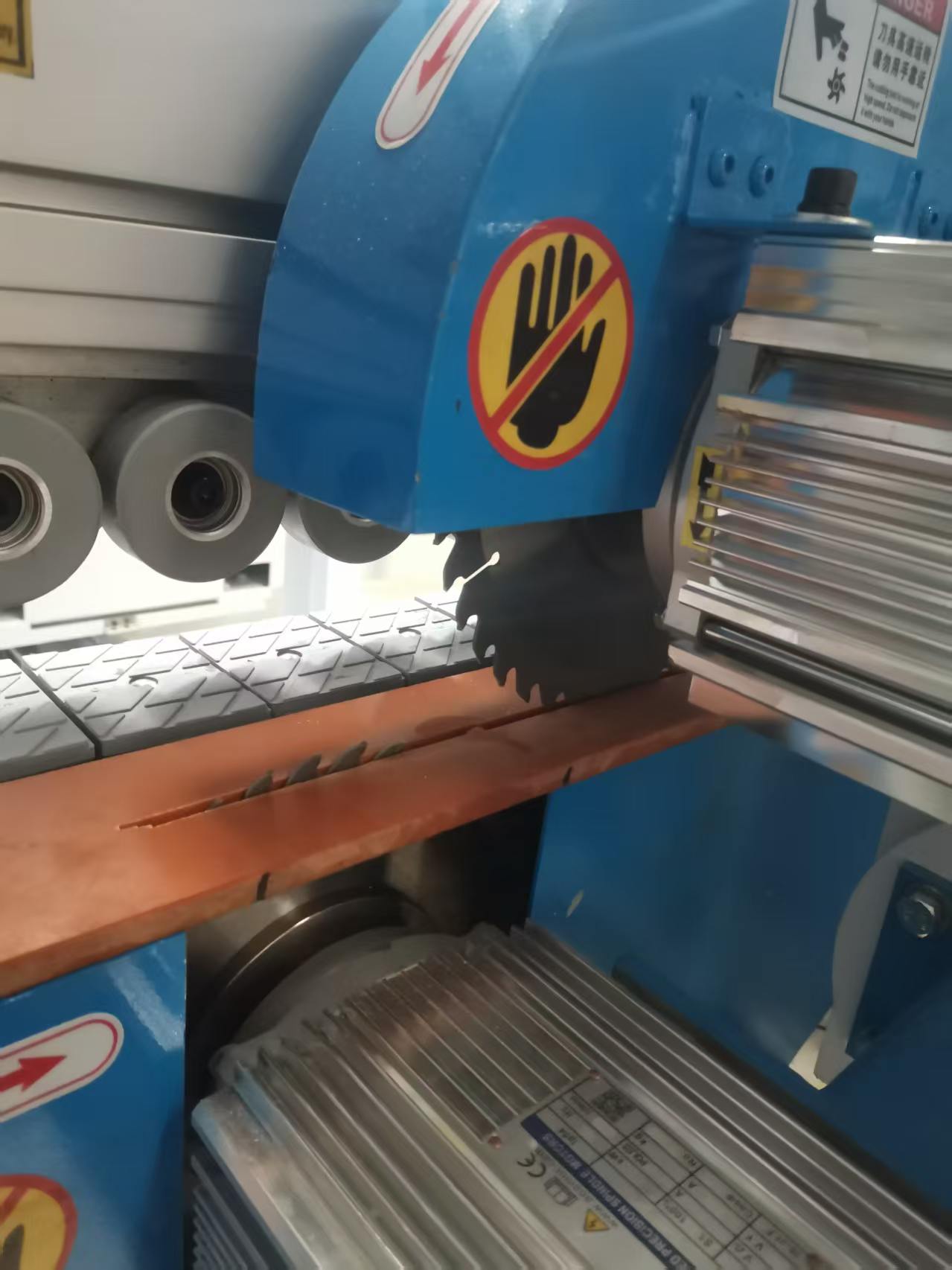
A visually clean sample does not establish stable production performance by itself. The Double-end Saw uses upper and lower sawing methods, with a 4 kW upper electric spindle and a 2.2 kW lower electric spindle. Both spindles are specified at 6000-8000 rpm, and the lower saw includes an explosion-proof edge. Frequency converter speed control should be checked during operation rather than accepted from appearance alone.
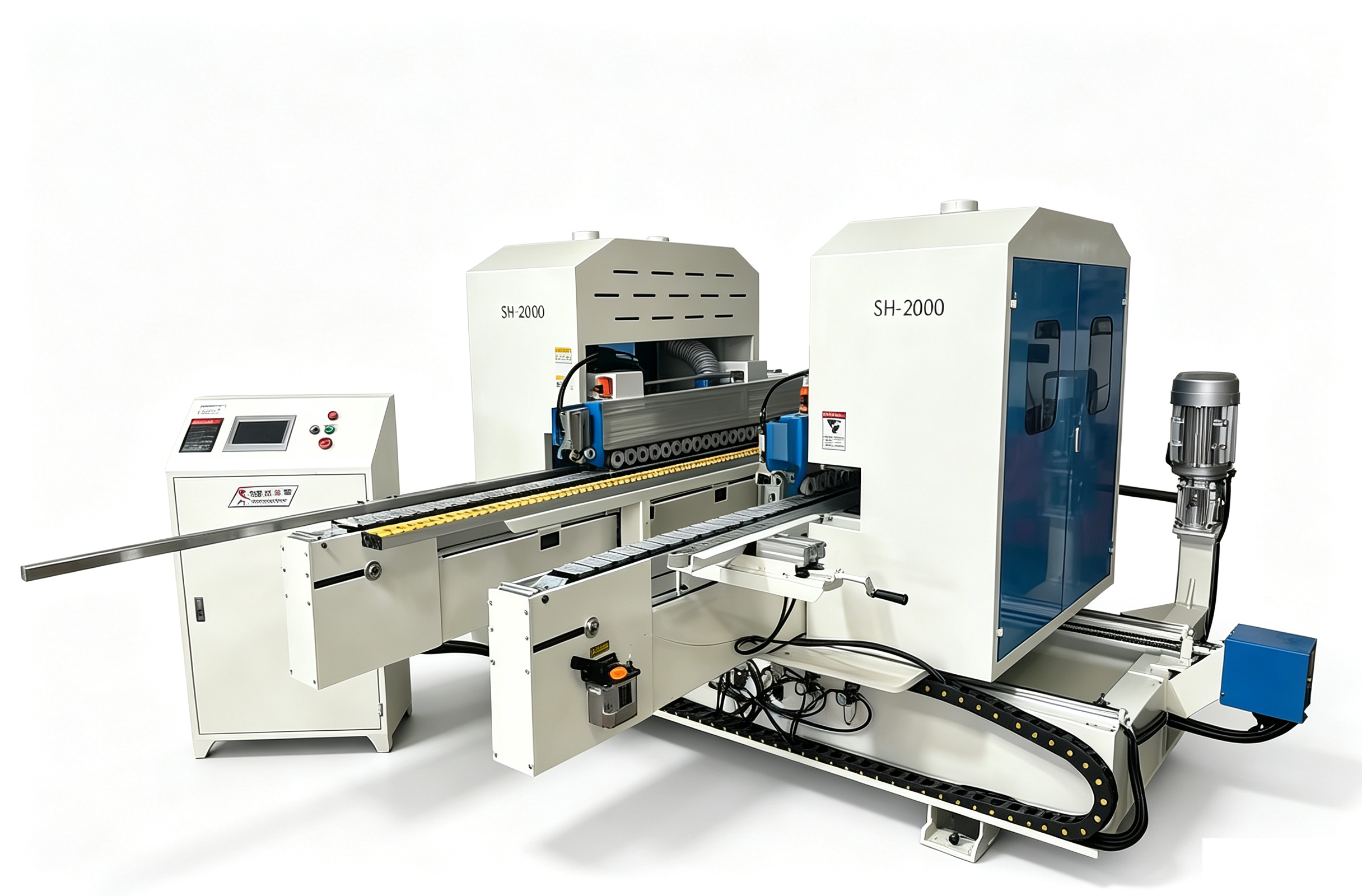
Dimensional consistency depends on the adjustment and feeding systems. The machine uses a servo motor, ball screw, and touch screen for width adjustment. Material cutting adjustment uses two 550 W servo motors and ball screws. The conveyor uses a 2.2 kW motor with adjustable speed, while the feeding point includes a positioning device. A production review should confirm that these systems retain repeatable positioning during extended operation.
Production risk control also depends on process discipline. Foshan Sun Hunt uses source control, key-parameter production control, warehousing, packaging, QC inspection, pre-shipment inspection, and after-sales service systems. The stated controls cover component screening, dimensional tolerance, fitting clearance, transmission coaxiality, electrical matching, complete-machine testing, order-item verification, and packaging checks.
Before shipment, the machine should complete precision calibration and long-hour load running tests. The inspection scope includes mechanical clearances, positioning accuracy, control programs, machine surfaces, documentation, matching tools, spare parts, and consumables. Any detected surface blemish, loose screw, machining deviation, or performance fault is assigned for rework before delivery.
Two documented cooperation cases describe production-line planning experience: a 19-machine wooden door factory line in India and a 10-machine wood processing line in the UAE. These cases indicate experience with complete line equipment planning, rather than evaluation of a single isolated machine.
Data/Solution Comparison
| Verification area | Sample-only indication | Production-risk control |
|---|---|---|
| Cutting and adjustment | Visible upper and lower saw arrangement | Confirm servo width adjustment, ball screws, positioning, and repeatability during operation |
| Operating stability | Successful short demonstration | Review long-hour full-load running, electrical stability, noise, vibration, and precision remeasurement |
| Quality consistency | Acceptable appearance | Verify component inspection, process rechecks, traceability, and complete final QC records |
| Delivery readiness | Machine is visibly complete | Match machines, spare parts, consumables, tools, packaging, and documents against the order before container loading |
| Post-delivery continuity | Machine starts during demonstration | Confirm remote diagnosis, installation tutorials, spare-parts response, warranty terms, and upgrade support |
Frequently Asked Questions (FAQ)
What tests should be requested before accepting a Double-end Saw sample?
Request full precision calibration, no-load operation, long-hour full-load running, precision remeasurement, noise and vibration detection, and electrical stability checks. Confirm that mechanical clearances, positioning accuracy, and control programs have been reviewed.
Which machine specifications should be checked against production requirements?
Check the upper 4 kW spindle, lower 2.2 kW spindle, 6000-8000 rpm spindle speed range, frequency converter control, 2.2 kW adjustable-speed conveyor, positioning device, servo width adjustment, electric lifting, and the stated 3800x2600x1900 mm dimensions and 2000 kg weight.
How can delivery risks be reduced after the factory test?
Use the pre-shipment inspection to verify quantity, appearance, packaging, documentation, spare parts, consumables, and matching tools. Packaging should protect precision machine heads, electric control panels, and guide rails against moisture, impact, vibration, and sea-transport conditions.
Final Conclusion & Recommendations
A reliable Double-end Saw assessment must connect machine specifications with long-duration testing, process traceability, final order verification, and post-delivery support. Foshan Sun Hunt supports non-standard customized products and complete production line solutions, with a minimum order quantity of one set and a stated normal delivery time of 30 days for this product. Its stated support includes permanent technical assistance, spare-parts dispatch within 2 working days after fault and part confirmation, a one-year warranty, and machine modification or control-system optimization services. For detailed technical solutions or support, please contact Vincent Guo at vincent@fsshmachine.cn.
About Us
Foshan Sun Hunt Woodworking Machinery Co.,Ltd., also known as Sun Hunt Machinery, develops and produces woodworking machinery for different processing purposes from its base in Lunjiao Town, Shunde District, Foshan City. Established in 2014, the company operates a two-thousand-square-meter factory and has an R&D and management team focused on woodworking machinery production technology. Its documented cooperation cases include wood door and wood processing production-line projects in India and the UAE.

SUBSCRIBE
INQUIRY