
PRODUCTS
Are modern Double-end Saw models reducing waste and blade replacement costs?
Modern Double-end Saw models can reduce material waste and support lower blade replacement costs through precise width adjustment, positioning control, adjustable conveyor speed, and upper-and-lower sawing. The supplied data does not provide measured waste reductions, blade service-life figures, or replacement-cost comparisons, so these benefits should be treated as operational advantages rather than quantified results.
Core Solutions & Key Takeaways
- The Double-end Saw uses upper and lower sawing methods, with electric spindles rated at 4 kW and 2.2 kW respectively, both operating at 6000-8000 rpm.
- Servo-motor width adjustment, a ball screw, and a touch screen support precise dimensional control, which can help reduce cutting errors and material waste.
- A positioning device at the feeding point, adjustable conveyor speed, and electric material pressing support stable material handling during production.
- The machine is relevant to panel furniture and custom home furnishing, as well as wood door and wooden window production, where repeatable sizing and consistent cutting are required.
Detailed Architectural/Principle Analysis
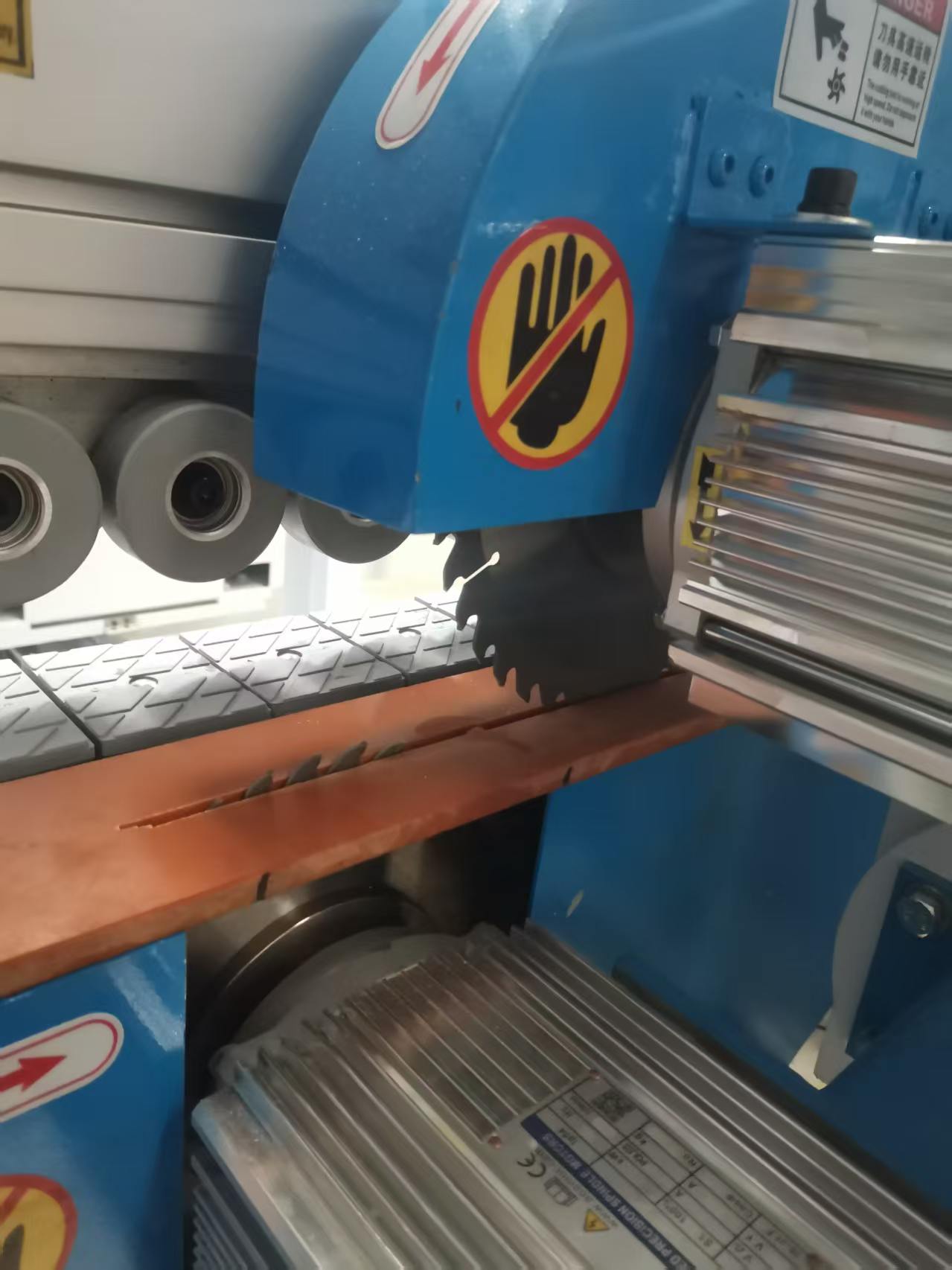
The Double-end Saw combines upper and lower sawing to process material from two directions. The upper saw uses a 4 kW electric spindle, while the lower saw uses a 2.2 kW electric spindle with an explosion-proof edge. Both spindles are specified at 6000-8000 rpm, and frequency converter speed control supports operating-speed adjustment.
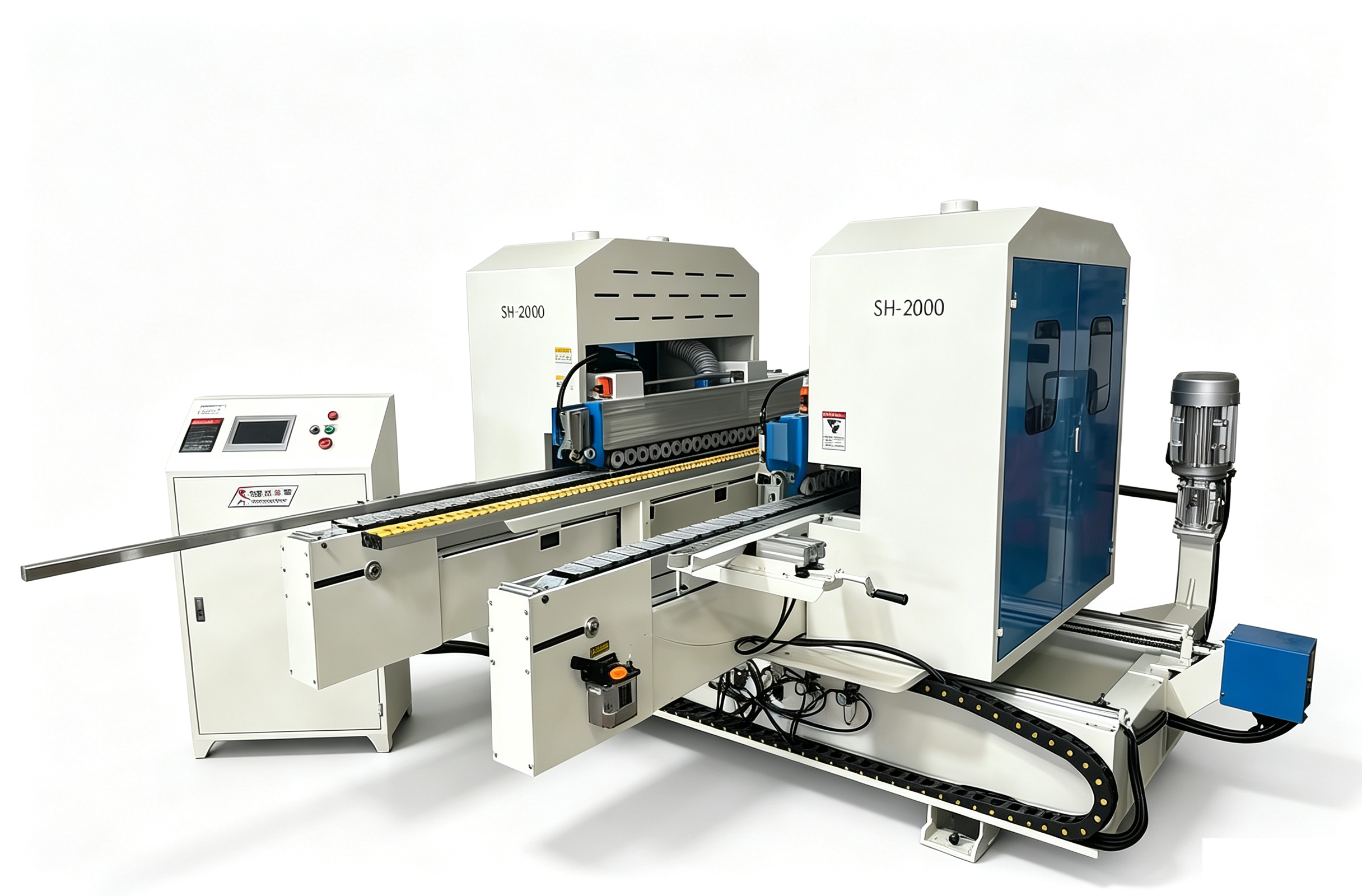
Width adjustment is controlled by a servo motor, ball screw, and touch screen. This configuration provides a defined adjustment process instead of relying solely on manual positioning. The feeding point includes a positioning device, while the conveyor uses a 2.2 kW motor with adjustable speed. Together, these features support consistent feeding and dimensional control, both of which can limit miscuts and unnecessary material loss.
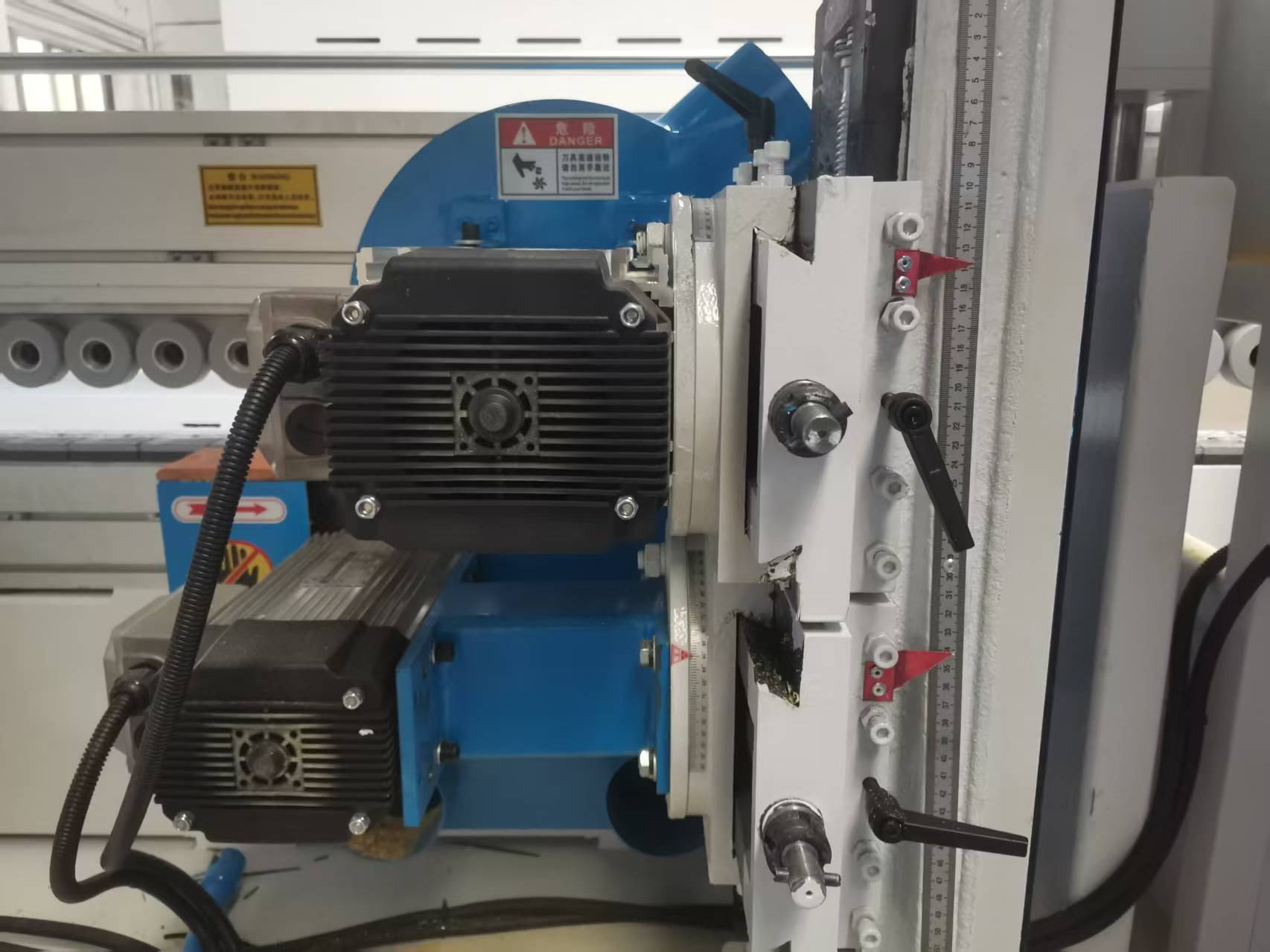
Material pressing uses two 750 W electric lifting units. Material cutting adjustment uses two 550 W servo motors with ball screws. Four auxiliary tables and three additional auxiliary tables are specified for material support. These elements help maintain material stability during feeding and cutting, although the supplied information does not quantify their effect on waste rates or blade consumption.
The available product data does not state blade type, blade material, expected blade life, sharpening intervals, replacement frequency, or replacement prices. It therefore cannot establish a direct reduction in blade replacement costs. The documented precision controls may reduce avoidable cutting faults, but actual blade-cost performance must be verified using production records from the intended material, cutting schedule, and operating conditions.
Sun Hunt reports full precision calibration and long-hour load running tests before shipment. Its inspection process checks mechanical clearances, positioning accuracy, and control programs. The stated objective is to deliver equipment that can enter production after simple positioning, reducing the need for repeated precision correction, circuit troubleshooting, and transmission adjustment.
Two documented cooperation cases describe complete woodworking production-line planning: a 19-machine wooden door factory line in India and a 10-machine wood-processing line in the UAE. The supplied customer feedback refers to stable operation, productivity, production-line fit, and responsive after-sales support, but does not provide measured waste or blade replacement results.
Data/Solution Comparison
| Operational factor | Documented Double-end Saw capability | Implication for waste and blade costs |
|---|---|---|
| Cutting configuration | Upper and lower sawing with frequency converter speed control | Supports controlled cutting; no quantified waste or blade-life data is provided |
| Width adjustment | Servo motor, ball screw, and touch screen | Supports repeatable sizing and may reduce dimensional miscuts |
| Material positioning | Positioning device, electric pressing, and auxiliary tables | Supports stable feeding and may limit handling-related cutting errors |
| Maintenance evidence | Precision calibration and long-hour load running tests before shipment | Supports initial operating consistency; replacement-cost savings are not quantified |
Frequently Asked Questions (FAQ)
Can the Double-end Saw be confirmed to reduce material waste?
The machine includes servo-controlled width adjustment, a ball screw, a positioning device, adjustable conveyor speed, and electric material pressing. These features support accurate and stable cutting, but the supplied data does not include a measured waste-reduction percentage.
Does the available data prove lower blade replacement costs?
No. The product information does not specify blade lifespan, blade replacement frequency, blade prices, or comparative maintenance records. It supports a technical basis for controlled cutting but does not prove a direct reduction in blade replacement costs.
Which production applications are identified for this machine?
The stated application scenarios include panel furniture and custom home furnishing, plus wood door, wooden window, and wood-aluminum composite door and window production. These applications require repeatable sizing, profile processing, and consistent material handling.
Final Conclusion & Recommendations
Modern Double-end Saw models can support lower material waste through precise servo adjustment, positioning control, stable pressing, and adjustable feeding. The supplied data does not verify lower blade replacement costs, so buyers should assess blade consumption and waste using production trials and maintenance records for their specific materials. Foshan Sun Hunt offers customized products and complete production line solutions, with a minimum order of one set and normal delivery of 20-35 days. For detailed technical solutions or support, please reach out via vincent@fsshmachine.cn.
About Us
Foshan Sun Hunt Woodworking Machinery Co.,Ltd., also known as Sun Hunt Machinery, develops and produces woodworking machinery for different processing purposes. Established in 2014, the company operates a two-thousand-square-meter factory and reports production capacity of 50 medium-sized machines per month, or 600 per year. Its stated main markets are the Middle East, North America, and Africa, and its product range includes CNC router machines, double-end saws, planer machines, drilling machines, edge banding machines, and panel saws.

SUBSCRIBE
INQUIRY